
 614.224.6226
For a startup, the right advertising agency for startups Columbus founders choose should connect a defined audience and clear message to a useful next step. The most important decision may not be which channel to use, but what a potential customer experiences after clicking. Early interest matters most when it leads to a qualified inquiry, a customer conversation, or another action tied to a business goal.
That connection can be easy to overlook while you’re choosing where to focus, comparing agency approaches, or deciding how to measure a campaign. This guide offers a practical way to assess agency fit and campaign readiness, then connect your audience, message, and campaign to a clear conversion experience. You’ll also see when a guided lead-capture or consultation experience may work better than a generic form, and how Marcy Design connects advertising campaigns with creative and website work. By the end, you’ll have a focused next step for discussing your startup’s goals with a Columbus partner.
Key Takeaways
- Set a clear audience and business goal before choosing channels. Ad placement alone isn’t a campaign strategy.
- Connect each ad’s message to a relevant destination and measurable next step so the customer journey is easy to follow.
- Compare an advertising agency for startups Columbus founders are considering by its approach to strategy, creative, channels, reporting, and communication.
- Prepare a focused brief with your goal, audience, offer, destination, measurement plan, and customer questions to make planning more productive.
- Explore how Marcy Design connects advertising campaigns with social media, marketing materials, and website work, drawing on its Columbus roots dating to circa 1986.
Why a Columbus startup needs more than ad placement
Startups have little attention to waste, so every campaign needs a defined audience and business goal. Buying impressions can put a message in front of people, and regular social posts can keep a brand visible. But neither explains who the business wants to reach, what that audience should understand, or what they should do next. Advertising earns its place when those decisions work together.
That takes more than choosing a channel. Shape the message around a customer need, offer a relevant next step, and review whether the campaign supports the business objective. An overview of the history and services of an advertising agency offers useful background. Startup founders also need to understand how agency work connects to the company’s next milestone. A practical marketing approach starts with that connection, not a broad promise of growth.
Early plans don’t need perfect data, but they do need explicit assumptions. A startup might believe a particular audience is more likely to request a consultation, or that a specific product benefit will prompt inquiries. Write down those assumptions, choose an action to measure, and refine the plan as evidence accumulates. This helps separate what the campaign has taught you from what the team expected.
Which startup goals can advertising support?
Start by naming the goal, then match it to an action that signals audience interest. Awareness may invite someone to learn about the brand. Lead generation can encourage a consultation request. Product interest may prompt an inquiry or early-access sign-up. Customer acquisition focuses on a purchase or another defined commitment. These goals are related, but they aren’t interchangeable. Choose a measure that reflects the milestone the startup needs to support.
For an early-stage company, a useful first outcome may be a conversation that reveals whether the offer resonates, rather than an unclear target to “grow.” Define what counts as progress before the campaign begins. That gives the team and agency a shared basis for reviewing activity without treating exposure alone as proof of business impact.
What should a startup know before hiring an agency?
Founders don’t need a full marketing department or a mature dataset to start planning. Make an agency conversation more productive by identifying three basics: the audience you want to reach, the offer you want them to consider, and the business milestone the campaign should support. The phrase advertising agency for startups Columbus signals a local search, but fit depends on whether the agency can connect its recommendations to those priorities.
Bring what you already know, including customer questions, existing brand materials, and useful website information. Be candid about what remains uncertain. A strong starting discussion can turn those inputs into a focused plan, with testable assumptions and a defined way to learn as the startup moves forward.
How startup advertising connects audience, message, and conversion
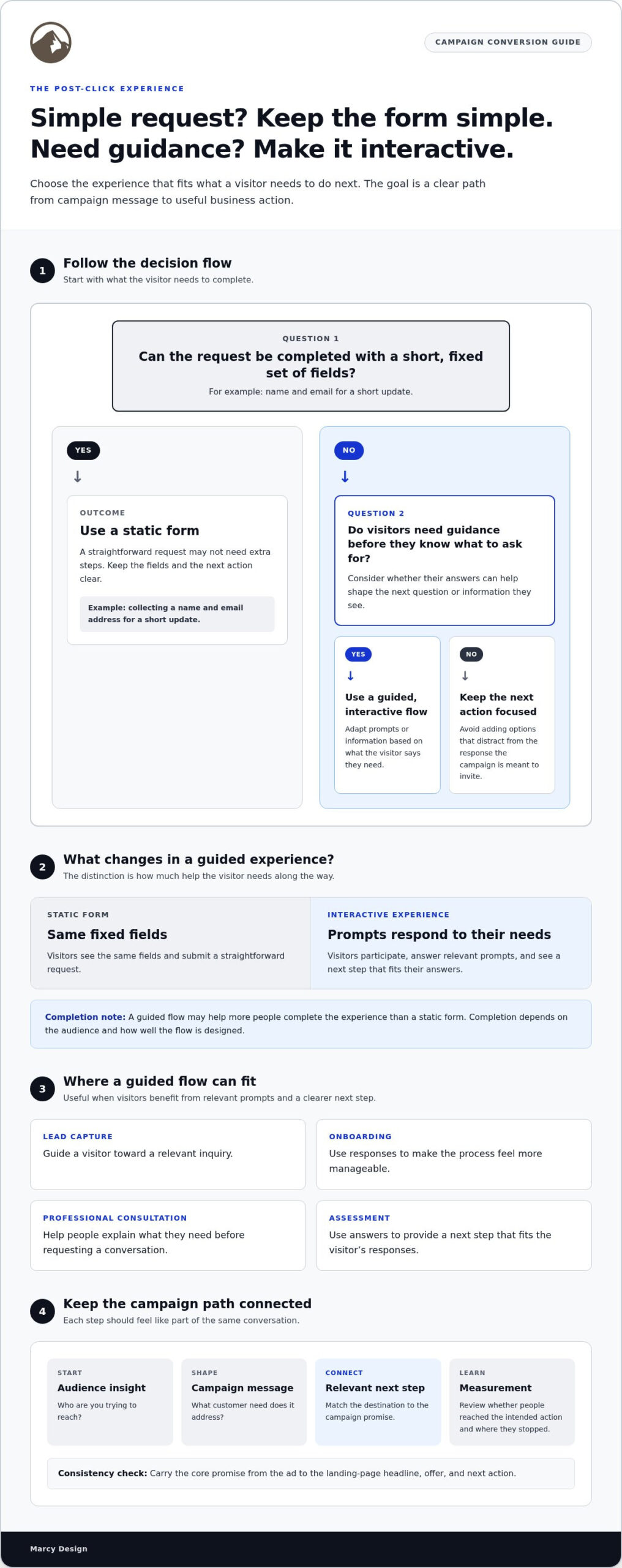
A campaign is more than an ad and a destination page. It’s a connected path: audience insight shapes the message, the message invites an action, and measurement helps the team understand what happened next. Each step should feel like part of the same conversation. If an ad promises a useful consultation but the landing page offers only a generic newsletter sign-up, the experience breaks before the startup can learn whether the offer fits.
A conversion path is the sequence of steps that takes someone from first seeing a campaign to completing a useful business action. That action might be requesting information, booking a consultation, or expressing interest in a product. Defining it upfront helps a team assess more than impressions or clicks. It can check whether people reached the intended next step and where they stopped.
Consistency reduces friction. Carry the same core promise, language, and visual cues from ad to landing page, then make the next action easy to find. A startup promoting early access, for example, should explain clearly what the visitor is signing up for. Relevant website design can help create a campaign destination that supports the message.
When does an interactive experience help more than a static form?
A static form is often the right choice when the request is simple, such as collecting a name and email address for a short update. An interactive experience can be more useful when people need guidance before they know what to ask for. Personalization means adapting questions or information based on what a visitor says they need, rather than showing everyone the same fixed fields.
That guidance invites active participation: visitors respond to relevant prompts and see a next step that fits their answers, rather than facing a wall of fields. For lead capture, onboarding, an assessment, or a professional consultation request, a guided flow can make the process feel more engaging and manageable. It may help more people complete the experience than a static form, but completion rates depend on the audience and how well the flow is designed.
How can a startup make the post-click experience feel relevant?
Match the landing-page headline and offer to the campaign promise. If an ad speaks to a specific challenge, the page should acknowledge that challenge and explain the next step without making visitors work out the connection themselves. Keep the action focused. Extra options can distract from the response the campaign is meant to invite.
The same principle applies to onboarding. Instead of presenting a long, identical list of fields, a guided sequence can break the process into manageable steps and explain why each question matters. Review completion rates alongside the quality of inquiries and what people do afterward. A higher completion rate isn’t guaranteed; it’s a signal to interpret and use when refining the experience.
For an advertising agency for startups Columbus founders are considering, the key is whether campaign planning accounts for what happens after the click, not just the ad. Connect the audience, promise, destination, and next action, then learn from the responses.
How to compare Columbus advertising agencies for startup fit
A polished portfolio can show creative range, but it won’t explain how an agency would approach your startup’s immediate needs. Compare the working process: how strategy informs creative, where campaigns lead, what gets measured, and how the team communicates. Specific explanations make fit easier to assess than broad promises of growth or guaranteed results.
Use this framework to focus conversations on the details that shape a campaign:
| Area | What to look for |
|---|---|
| Strategy | A clear connection between the audience, business goal, campaign message, and intended action. |
| Creative | A process for developing consistent messages and creative that suit the audience and offer. |
| Channel scope | A reasoned explanation of which channels fit the goal, rather than an automatic recommendation to use every channel. |
| Destination experience | Attention to the page or other destination visitors reach, including whether it supports the campaign promise. |
| Reporting | A clear account of what activity will be measured and how the findings can inform decisions. |
| Communication | Shared expectations for updates, decisions, responsibilities, and how questions will be handled. |
Which questions reveal an agency’s strategic approach?
Ask how the proposed plan connects audience definition to campaign messaging and the action you want people to take. Ask what signals the team will review and how those findings could shape the next decision. Then discuss your existing website and marketing materials. This helps reveal whether the plan builds on what you have or assumes every campaign starts from scratch.
The answers should make the reasoning clear, even if some details evolve as the team learns. Strategy, creative, channel choices, and the visitor’s destination should be treated as connected parts of the work.
How can a startup assess value without guaranteed results?
Separate the work an agency can plan and deliver from outcomes that depend on audience response and other factors. A defined scope can name the work, responsibilities, review points, and reporting approach without promising a particular number of leads or sales. That clarity gives the startup something concrete to assess and keeps expectations grounded.
A manageable first engagement can focus on one business priority and a clearly described set of work, rather than committing immediately to a larger program. Shape the scope around your goal, available resources, and current evidence. One useful starting point might be improving a campaign destination before expanding activity. Marcy Design’s website design services connect the destination experience to the broader campaign journey, helping the landing page support the campaign’s purpose.
For founders comparing an advertising agency for startups Columbus companies may consider, value comes from a clear plan, useful communication, and learning the team can act on. Start with questions that make the work understandable, then decide whether the proposed scope fits the milestone ahead.
How to prepare a startup advertising brief and conversion path
A useful brief doesn’t need to be long. It needs to help everyone make connected decisions, from who the campaign should reach to what the startup will learn from the response. Before planning, gather existing brand materials, website pages, and customer questions. They can show what people already understand, where they need clarification, and what the campaign should address.
Use this sequence to turn the basics into a workable brief:
- Goal: State the business objective or milestone the campaign should support.
- Audience: Describe who you want to reach and what they may need or want.
- Offer: Explain what you’re presenting and the message people should remember.
- Destination: Choose where the audience should go after seeing the campaign.
- Measurement: Decide which actions will show whether the campaign is contributing to its goal.
- Review: Set a point to examine the evidence, discuss what it suggests, and refine the plan.
Measure a campaign by the business action it is meant to support, not by activity that only looks encouraging. Clicks may show that an ad attracted attention, but they don’t establish whether the intended audience took a meaningful next step. If the goal is to begin sales conversations, track qualified inquiries or consultation requests. If the offer is early access, measure sign-ups for that opportunity.
What belongs in a startup’s first advertising brief?
Write down the objective, audience, offer, core message, and action you want people to take. Note practical constraints that may shape the work, such as existing materials or a destination page that needs updating. Include customer feedback and frequently asked questions. These details give planning a grounded starting point without requiring a mature dataset or a complete marketing department.
Keep the brief honest about what’s known and what’s still an assumption. For example, a consultation request may be the desired action, while the audience’s main concern may need further exploration. Naming both helps the team build a plan it can evaluate and adjust.
How should a startup make the destination ready?
Review the page a visitor will reach. Does it explain the offer, carry through the campaign’s central message, and make the next step clear? For straightforward lead capture, a short static form may be enough. For a more involved request, such as arranging a professional consultation or completing an assessment, a guided experience can break the process into clearer steps and tailor questions to a visitor’s stated needs.
Choose the simplest format that makes the task clear, then monitor whether people complete it and whether the resulting inquiries fit the goal. Digital marketing planning can connect campaign activity with the startup’s online presence and intended customer action.
Bring your brief, available materials, and questions into a conversation with Marcy Design about your campaign goals. A focused starting point makes it easier to discuss what should happen next with an advertising agency for startups Columbus founders are considering.
How Marcy Design can connect Columbus startup campaigns to digital experiences
Marcy Design is a Columbus-based creative agency with a history dating to circa 1986. For a startup, working with a local creative partner can bring campaign planning and the customer’s destination into the same conversation. Advertising campaigns, social media management, and marketing materials can work alongside website design so the message stays recognizable as a potential customer moves from an ad or post to the company’s online experience.
That connection matters. A campaign can introduce an offer, while the landing page explains it and makes the next step clear. If the language or emphasis changes abruptly after a click, visitors may have to work harder to understand whether they’ve reached the right place. Custom web design gives a startup room to shape the destination around its message and audience. It supports a coherent experience, not a guaranteed campaign result.
Where can campaign and website work reinforce each other?
Start with the offer. If a campaign promotes a product inquiry, the destination should explain what the product does and how to ask about it. If an ad invites a consultation request, the page should make that action easy to understand. The headline, supporting information, and visual presentation can carry the same central idea across both experiences.
Consider the device, too. A prospect may arrive on a phone, so the page should remain clear and usable on a smaller screen. Mobile-responsive web design adapts the experience to different screen sizes, helping visitors follow the content and find the intended action. Marcy Design’s website design services can support a destination that fits the campaign’s purpose.
What can a first conversation with Marcy Design focus on?
Bring three starting points: the audience you want to reach, the business goal you’re working toward, and the marketing challenge that feels most pressing. Then describe what you already have, such as a website, campaign materials, or social channels. You don’t need every detail settled. A focused conversation can help clarify how advertising, creative, and website needs relate to your priorities.
For founders considering an advertising agency for startups Columbus, the right first step is a practical discussion, not a commitment to a preset package. Share what you want the campaign to accomplish and where the customer experience currently feels incomplete. From there, the scope can be shaped around your goals and available resources, whether the immediate need is campaign creative, a stronger destination, or a more connected experience across both.
Ready to discuss your startup’s goals and campaign needs? Start a conversation with Marcy Design and bring the audience, offer, and next business milestone you want your advertising to support.
Turn your next campaign decision into a clear starting point
Your next move doesn’t have to be a full-scale campaign. Choose one business priority, decide what you need to learn, and identify the customer action that would give you a useful signal. That focus can turn uncertainty into a practical conversation about what to test, what needs preparation, and how advertising should connect with your startup’s digital experience.
Finding an advertising agency for startups Columbus founders can work with is about more than selecting channels. It’s about shaping an approach that fits your goals and gives your team a clear way to evaluate what happens next. Bring your current challenge, the audience you hope to reach, and any questions you want a campaign to answer.
Marcy Design can discuss how advertising, creative, social media, and website needs may fit your startup’s priorities. Start with the goal you want to move toward, even if the details are still taking shape. Discuss your startup’s advertising goals with Marcy Design, and take the next step with a clear focus.
Frequently Asked Questions
How much does it cost to hire an advertising agency for a startup in Columbus?
There isn’t one standard cost; the scope and type of work shape the investment. A startup might need campaign planning and creative, or it may also need help preparing a website destination and marketing materials. When reviewing a proposal, separate agency work from advertising platform spend and clarify which deliverables, revisions, and reporting are included. That makes options easier to compare against your resources and priorities.
When should a startup hire an advertising agency?
Consider bringing in an agency when you can describe a business priority but need help turning it into coordinated campaign work. You don’t need every detail settled, but someone should be available to make decisions and follow up on inquiries. If a campaign is meant to generate consultation requests, for example, plan who will respond and what happens after a prospect submits a request.
Can a startup advertise effectively before it has a large customer base?
Yes. A large customer base isn’t required to start learning from advertising. A startup can focus on a defined audience and a specific offer, then treat the response as early evidence rather than proof of broad demand. For example, a software company could introduce one use case to a clearly described group and note the questions or objections that arise. Keep conclusions proportionate to what the campaign can show.
What should a startup measure in an advertising campaign?
Measure the response that matters to the business, then look beyond raw volume. If a campaign generates inquiries, review whether those people fit the intended customer profile and what conversations follow. For an ecommerce offer, consider whether visitors move from product interest to a completed order. Keep a simple record of campaign activity and resulting actions so the team can compare what it tried and make informed choices.
Is a local Columbus advertising agency a good fit for a startup?
It can be, especially if local collaboration and familiarity with Columbus audiences matter to your plans. An advertising agency for startups Columbus founders consider should explain how its proposed work fits the company’s stage, resources, and priorities, rather than assuming every startup needs the same approach. Local proximity may make working sessions more convenient, but the practical test is whether communication and responsibilities suit your team.
Should a startup choose an interactive lead form or a simple contact form?
Choose the format that matches the effort and decision the visitor faces. A simple form works well for a straightforward request, such as asking for a callback. An interactive form can guide visitors through choices when their needs vary, such as selecting a consultation topic before submitting details. Keep questions relevant and explain why they’re being asked. Review abandonment and submission quality to see whether the experience needs adjustment.
Can an advertising agency help with both campaigns and a startup website?
Yes. An agency with both capabilities can coordinate campaign creative with the website pages visitors reach, helping the offer and next step stay aligned. That can be useful when a startup needs a campaign landing page, updates to an existing site, or a clearer route from an ad to an inquiry. Agree on who handles each part of the work and how decisions will be shared, so responsibilities stay clear.