
 614.224.6226
What if your trade show materials did more than make the booth look polished? The strongest marketing materials for trade shows help the right visitors recognize what you offer and give your team a natural way to start a useful conversation. It’s easy to spend on brochures and giveaways that get picked up, then overlooked.
A booth experience works harder when its message, materials, and interactions fit together. A clear display can draw someone in. A useful handout or guided demo can make the conversation more personal, and a simple lead-capture step can help your team record details for follow-up. Static materials have a role, but interactive moments help visitors explore what’s relevant to them.
This article will help you choose materials that match your audience and event goals, make booth conversations more engaging, and create a clear path from first interaction to follow-up. You’ll see how strategic design can connect booth visuals, practical resources, and digital touchpoints into one coherent experience, so every element has a purpose.
Key Takeaways
- Match marketing materials for trade shows to a clear event goal, whether you’re building awareness, explaining a product, capturing leads, or strengthening relationships.
- Use guided interactions to make the booth experience more responsive to each visitor than a static display alone.
- Choose each format for its purpose: signage attracts attention, while focused handouts or digital touchpoints support the next step.
- Plan lead capture and follow-up in advance by deciding what details to record and who will act on them after the event.
- Align booth visuals and digital materials with consistent messaging so visitors can recognize your brand beyond the show floor.
Marketing Materials for Trade Shows: Start With the Audience and Goal
Start with the visitor, not the product catalog. Before choosing brochures, signage, demonstrations, or giveaways, ask what the people you want to reach need to understand, experience, or do. Then connect each material to a specific event objective. A booth designed to build awareness needs to make the brand easy to recognize. Product education calls for clear explanations. Lead capture needs a relevant next step, while relationship-building depends on conversation, not simply handing someone a flyer.
Trade shows bring businesses and audiences together for promotion, information, and networking, often through exhibits and other event activities. But your booth has only a moment to make its purpose clear. Trade show formats vary, so consider who is likely to attend, what they already know, and what questions your team expects to hear. A first-time prospect may need a simple explanation, while an existing customer may be ready to discuss a specific challenge.
A trade show material strategy is a plan for using each booth item to meet a visitor need and move an event goal forward. That principle keeps the experience focused, whether the goal is awareness, education, lead capture, or stronger customer relationships.
Set a clear purpose for each trade show material
Give each item one main job: attract attention, explain an offer, or prompt a useful action. A product demonstration, for example, lets a visitor see how a solution works and ask questions. A lead-generation conversation explores the visitor’s needs and offers a relevant next step, such as arranging a follow-up discussion. Materials should support the interaction, not compete with it.
A pile of unrelated handouts can leave visitors unsure what to remember. Build one shared message across the display, printed takeaways, and digital content. If you’re shaping those pieces around a clear audience and business objective, Marcy Design’s marketing materials can help create a more coherent event experience.
Keep the booth message easy to understand
Lead with a problem your audience recognizes or a business value they care about, not a dense list of features. Make the headline, supporting detail, and next action work together: the headline earns attention, the detail clarifies the value, and the action tells visitors how to continue. Keep the language direct enough that a team member can use it naturally to open a conversation.
Audience knowledge makes that message more relevant. A local event in Columbus, for instance, may bring together businesses with shared regional interests, but each visitor still has different priorities. Prepare your team to adapt the conversation while keeping the central message consistent. Ask what the visitor is trying to solve, choose the most useful explanation or demonstration, and offer a next step that fits their interest. That turns materials into part of a purposeful booth experience, rather than a disconnected collection of items.
Turn Static Trade Show Materials Into a Guided Experience
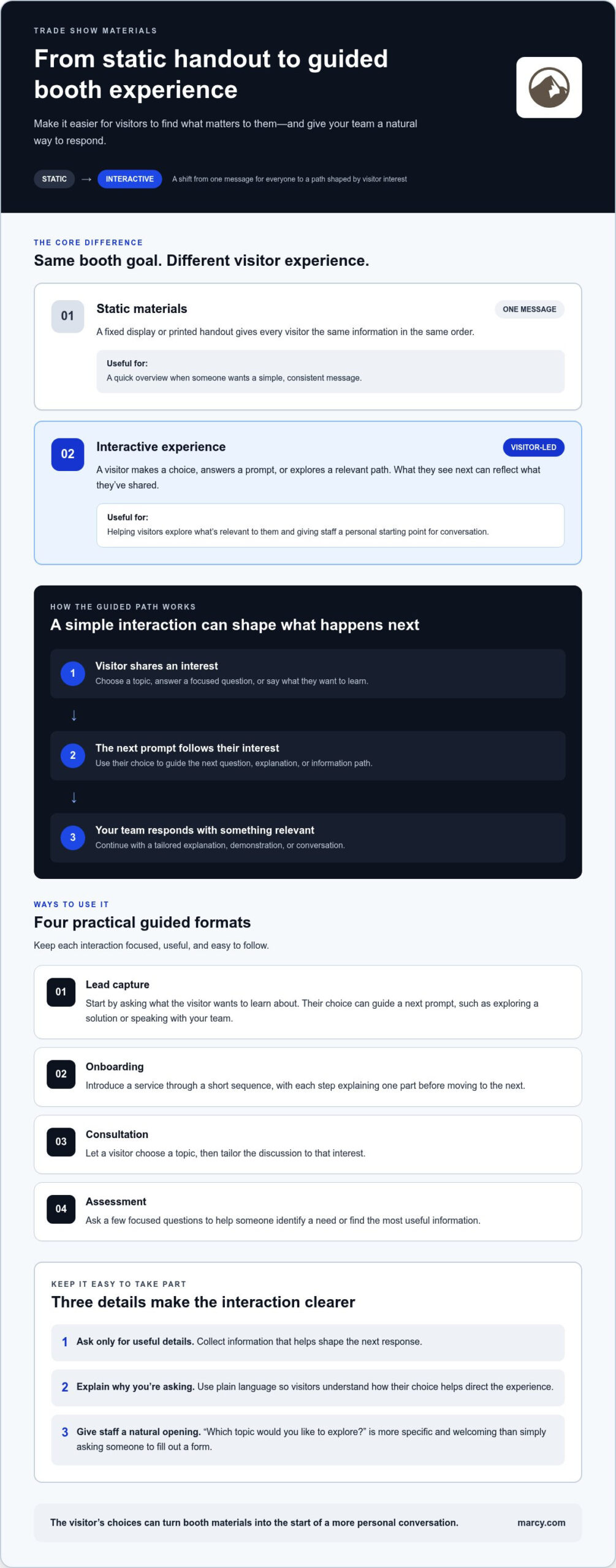
A printed handout or fixed display gives every visitor the same information in the same order. That’s useful when someone wants a quick overview, but it can’t respond to what they’re curious about. An interactive experience invites visitors to make choices, answer a prompt, or explore a relevant path. The information they see next can reflect what they’ve shared.
A static handout delivers a message; an interactive experience adapts the message to the visitor. That distinction can shape how you use marketing materials for trade shows. A QR code leading to a tailored digital journey, a touchscreen with selectable topics, or a short staff-led assessment can turn passive browsing into an active exchange.
Guidance doesn’t require complicated technology. The goal is to make it easier for visitors to find what matters to them and for your team to respond with something relevant.
Use interactive experiences to make the next step relevant
Build the interaction around visitor intent. For lead capture, start by asking what the person wants to learn about. Their choice can guide the next prompt, such as whether they’re exploring a solution or looking for a conversation with your team. A useful question should feel like part of the experience, not a form placed in its way.
- Onboarding: Introduce a service through a short sequence, with each step explaining one part before moving to the next.
- Consultation: Let a visitor choose a topic, then have a staff member tailor the discussion to that interest.
- Assessment: Ask a few focused questions to help someone identify a need or understand which information may be most useful.
These formats give visitors a more active role than a brochure alone. They can also help staff make the conversation personal, because the visitor’s choices provide a natural place to begin.
Make participation simple for visitors and staff
Keep the experience focused. Ask only for details that help shape the next response, and explain their purpose in plain language. If someone selects a topic before a consultation, for instance, tell them that their choice helps the team direct them to relevant information. Clear prompts reduce guesswork for both sides.
Give booth staff an easy invitation, such as, “Which topic would you like to explore?” That’s warmer and more specific than asking someone to fill out a form. Keep screens, prompts, and staff language consistent, and make it easy to continue the conversation if a visitor doesn’t want to complete every step. Completion is a design goal, not a guaranteed result.
When digital materials are part of the booth experience, a thoughtful digital marketing strategy can connect the interaction with the broader event message.
Choose Trade Show Materials by Format, Audience, and Purpose
The right format depends on what a visitor needs at each point in the booth experience. A sign should catch attention quickly. A product sheet can answer specific questions. A digital touchpoint can help someone explore a topic or take a next step. Choose each item for its role, then consider who will use it and what they should understand or do afterward.
Use this format-to-purpose guide as a starting point:
- Booth signage: Communicate the central value clearly enough to attract and orient visitors at a glance.
- Brochures: Offer a broader overview for people who want to review your organization or services later.
- Product sheets: Give interested prospects focused details they can compare, discuss, or share with colleagues.
- Giveaways: Create a natural opening for conversation, while keeping the value proposition at the center.
- Digital touchpoints: Guide visitors to relevant information, a demonstration, or another event-related action.
These formats work best as a coordinated set, not as a checklist to fill. One clear sign and a focused follow-up resource may serve visitors better than several pieces repeating the same information. A well-planned marketing materials strategy connects format, message, and audience need.
Match physical materials to the conversation
Signage has a fast job: explain what the booth offers and why it may matter. Keep its main message easy to grasp from a distance. Printed information can go deeper, but save detailed product explanations for visitors who ask questions or need something useful to take away. A giveaway can help start a conversation, but it can’t replace a clear reason to engage.
Consider the visitor, too. A prospect may want an introduction to the problem you solve, while an existing customer may value an update or a detailed product sheet. A partner could need information that supports a shared opportunity. General visitors may appreciate a concise overview that helps them decide whether to learn more. The same handout won’t necessarily serve all four audiences equally well.
Connect digital touchpoints to a specific visitor need
A QR code is only useful if the destination delivers on its promise. Link it to a focused page with information that matches the nearby message, rather than sending every visitor to a general homepage. A product demonstration could lead to a page with relevant details; a consultation prompt could open a clear way to express interest; an assessment could guide visitors through a few tailored questions.
Before adding a digital element, ask what it makes clearer or easier. If it simply duplicates a printed sheet, it may add friction instead of value. Keep the destination consistent with the booth’s visual identity and language, and make its next step obvious. The strongest mix gives visitors a quick overview when that’s all they need, with a deeper resource ready when they want to explore further.
Plan Lead Capture and Follow-Up Before the Trade Show
A booth conversation has more value when it leads somewhere useful. Plan that next step before the event, then design lead capture around it. If the follow-up is a consultation, for example, the capture process should help the team understand what the visitor wants to discuss. If it’s a tailored resource, record the topic that will make it relevant.
Useful lead capture records what the team needs to take a relevant next step, then makes that step clear to the visitor. This keeps information gathering connected to the conversation instead of turning it into a form-filling exercise. It also gives your team a practical way to judge whether your marketing materials for trade shows are supporting meaningful interactions.
Design a lead-capture path visitors will understand
Build the process in a simple sequence:
- Define the follow-up action. Decide whether the visitor can request a consultation, receive a specific resource, or continue a product discussion.
- Capture only useful details. Ask for information that helps your team prepare or respond, such as the visitor’s area of interest. Explain why you’re asking and how the answer will shape the next step.
- Assign ownership. Make clear who will handle each follow-up, so a promising conversation doesn’t sit in an unassigned list.
Make the exchange feel worthwhile. A visitor who shares a specific challenge might be offered a conversation focused on that need; someone who wants to explore a topic could be directed to a relevant resource. A clear invitation and an easy way to respond help visitors understand what happens next.
Make post-event follow-up part of the experience
After the show, group leads by what they expressed interest in, not just by how they entered the booth. That gives follow-up a personal starting point. A message to someone who requested an assessment can refer to that discussion, while a visitor who asked for product information can receive the material they wanted. Avoid sending the same generic note to everyone.
Assigning ownership before the event makes it easier to connect each captured detail to a responsible team member. Keep the event’s language and visual identity consistent in follow-up materials, so recipients recognize the conversation and brand after leaving the booth. A brief reference to what they discussed makes the message feel like a continuation, rather than unrelated outreach.
Review the process after the event. Useful measures include the number of qualified conversations, which requested next steps were completed, where visitors stopped engaging, and whether follow-up reached the right owner. Look for patterns, not assumed benchmarks. If a prompt confused visitors or a resource drew interest but few people took the next step, adjust the path for the next event.
Connect your event message, lead-capture materials, and follow-up with Marcy Design’s marketing materials expertise to create a coherent experience from booth conversation to next action.
Bring Trade Show Messaging and Digital Materials Together With Marcy Design
A trade show presence is strongest when each touchpoint feels like part of the same conversation. Booth visuals introduce the idea, supporting materials add useful detail, and digital destinations help visitors continue exploring. If those pieces use different language or emphasize different benefits, the experience can feel fragmented. A coordinated approach gives visitors a consistent impression from their first glance through post-event engagement.
Marcy Design helps bring event goals, messaging, and creative materials into alignment. Through professional marketing materials design, the focus is on connecting what your audience sees with what your business wants them to understand and do. That means shaping the message around the event setting and visitor, then carrying it across the formats that support the experience.
Build a consistent event message across touchpoints
Consistency doesn’t mean repeating the same sentence everywhere. It means making every piece reinforce the same central value in a way that suits its role. A booth headline might state the benefit simply; a supporting piece can explain how it applies; a digital page can provide a tailored next step. Each touchpoint should feel connected while offering the right level of detail for that moment.
For campaign-level alignment, strategic marketing planning can connect event creative with broader business messaging. Keep the message specific to your audience, event, and objective. A partner-focused event may call for a different message and resource than a show designed to introduce a product to new prospects. Start with the audience’s context, then adapt the language and format without losing the core idea.
Turn the event plan into a clear next step
Before producing materials, bring the plan into focus. Define the event goal, map what visitors should experience, and select formats that support each step. Then check that the booth visuals, handouts, digital destinations, and follow-up carry a recognizable message. This keeps creative decisions purposeful and makes it easier for the team to guide visitors through the experience.
Marcy Design brings marketing materials and digital capabilities together to support a connected event presence, from the first message visitors see to the digital content that carries it forward. If your trade show plans need a clear creative direction, discuss your trade show marketing materials with Marcy Design. Start with the audience and goal, and build an experience that gives every touchpoint a job.
Make Your Next Trade Show Count
Your next event is an opportunity to shape what happens after the first hello. Treat the booth as the beginning of an ongoing brand experience, carrying a visitor’s interest from the show floor to a useful digital touchpoint and thoughtful follow-up. With a clear purpose behind your marketing materials for trade shows, each interaction can help build a stronger connection beyond the event itself.
Marcy Design is a Columbus-based creative agency that develops marketing materials and advertising campaigns, with web design and digital marketing capabilities to connect event messaging with online experiences. Bring your audience, event goals, and booth ideas together, and turn them into a focused creative direction.
Start a conversation about your trade show materials and take the next step toward a booth experience that feels purposeful, personal, and ready to connect.
Frequently Asked Questions
What marketing materials do I need for a trade show?
Choose materials based on what attendees should notice, understand, and remember. A practical starting point might include a clear booth message, a focused resource for visitors who want more detail, and a digital destination that supports a next step. For a Columbus business attending a regional industry event, consider whether attendees are local decision-makers, out-of-town prospects, or a mix, then tailor the information to their likely interests.
Are interactive trade show materials more effective than brochures?
Interactive materials can make an experience more responsive, while brochures let visitors review information at their own pace. Neither format is automatically more effective for every goal. A visitor comparing service options may value a guided conversation, while someone moving between sessions may prefer a concise printed reference. Consider how attendees will use the information, then offer a format that fits their attention, interest, and preferred way of learning.
How can I capture leads at a trade show without overwhelming visitors?
Make lead capture a brief, optional part of a useful exchange. After answering a visitor’s question, for example, a team member might ask whether they’d like a follow-up with more detail on that topic. Explain what the person can expect, and avoid requesting information that won’t help with that response. A friendly, transparent invitation gives visitors more control than presenting a long form before they understand its purpose.
Can a QR code help connect booth visitors with digital materials?
Yes, a QR code can take visitors directly to a relevant online resource, such as a product overview or event-specific page. Label it with a clear benefit so people know what they’ll find before scanning. Test the destination on different mobile devices and make sure the page is easy to read on a small screen. A short, memorable web address nearby can help visitors who prefer not to scan.
What should a trade show giveaway communicate about my business?
A giveaway should reflect the impression you want people to associate with your business, such as usefulness, thoughtful design, or a practical approach. It doesn’t need to explain every service. Instead, connect it to a short conversation about what your organization helps customers do. A team could use the item as a natural opener, then share a relevant example of its work rather than relying on the giveaway alone to tell the story.
How do I follow up with trade show leads after the event?
Follow up with a message connected to the individual conversation. Mention the question they raised, include the information they asked for, and make the next action easy to understand. If a colleague will continue the discussion, introduce that person clearly rather than making the recipient repeat the context. This personal continuity helps distinguish useful follow-up from a broad post-event message that could have gone to anyone.
How can I measure whether my trade show materials worked?
Compare each material with the job it was meant to do. For a digital page, review visits from its event-specific link; for a display, ask staff which questions or conversations it prompted. Brief team notes can reveal whether visitors understood the main message or needed further explanation. For Columbus-area events, compare those observations across shows with different audiences, then refine the materials based on what your team learned.