
 614.224.6226
Why are you still forcing your most valuable customers to navigate a digital experience that feels like a legacy spreadsheet? Friction kills growth. You already know that modern B2B buyers expect the same intuitive, frictionless journey they get on consumer platforms. Yet, balancing complex bulk pricing with manual ERP synchronization often creates a wall of resistance. This frustration doesn’t just slow down your team. It drives your long-term partners toward tech-forward competitors. Strategic B2B ecommerce web design is no longer optional for companies looking to scale in 2026.
At Marcy Design, we’ve spent 40 years helping Columbus businesses turn these technical hurdles into high-performance growth engines. You can move beyond static fields and clunky ordering processes. We’ll show you how to implement interactive tools that guide users through onboarding and professional assessments. This approach produces better results by replacing manual entry with automated reordering and deep software integrations. It’s time to stop reacting to the market and start leading it with a guided, personalized experience that secures buyer loyalty.
Key Takeaways
- Understand why business buyers now demand B2C-level simplicity and how to transition from static catalogs to dynamic, data-driven interfaces.
- Master the art of B2B ecommerce web design by replacing passive static fields with interactive elements that significantly improve engagement and completion rates.
- Discover how AI-powered solutions go beyond simple automation to deliver dynamic pricing and highly personalized experiences for every unique client login.
- Learn to design frictionless onboarding processes and lead capture tools that guide new clients through their first order with total confidence.
- Leverage 40 years of strategic expertise to bridge the gap between complex backend ERP systems and seamless, high-volume digital sales environments.
The Evolution of B2B Ecommerce Web Design in 2026
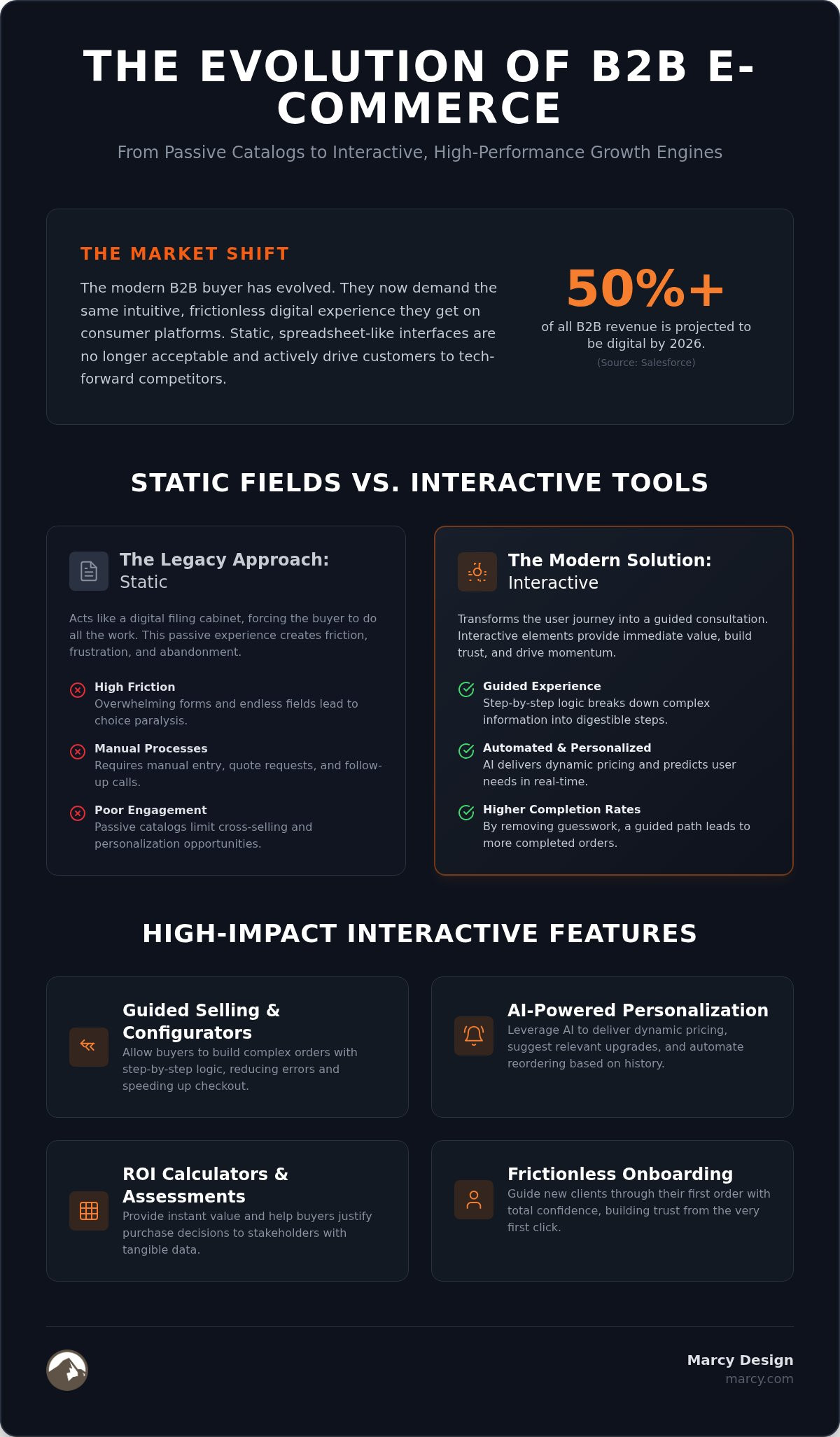
The expectation for business procurement has shifted fundamentally. It’s no longer enough to have a digital version of your paper catalog. Buyers now demand the same speed and ease they experience when shopping for themselves. This “consumerization” means your B2B ecommerce web design must prioritize simplicity without sacrificing the complex functionality your operations require. Industry leaders like Salesforce suggest that over half of all B2B revenue will be digital by 2026. If your platform isn’t ready to capture that volume, you’re essentially handing market share to your most tech-forward competitors.
Strategic alignment is the key. Your website should be a digital extension of your best sales representative. It needs to speak with the same authority and provide the same level of service. When you invest in professional website design, you’re building a system that reflects your offline excellence in a 24/7 digital environment. The global landscape of B2B e-commerce is evolving into a space where execution is everything. Outdated design doesn’t just look bad; it erodes the trust you’ve spent decades building with your partners.
Why Static Catalogs Fail in a Digital-First Market
Static catalogs are passive. They wait for the user to do the hard work of searching, comparing, and calling for a quote. When buyers expect instant answers, that friction is a deal-breaker. Static fields and PDF downloads limit your ability to cross-sell or suggest relevant upgrades based on a buyer’s history. By transitioning to a dynamic interface, you provide real-time inventory and personalized pricing displays. This guided experience leads to higher completion rates because it removes the guesswork. You aren’t just showing products; you’re facilitating a solution.
Defining the 2026 B2B Buyer Persona
The modern decision-maker is tech-native. They prefer self-service over a phone call every single time. However, business purchasing carries a unique emotional weight. Professional risk exists in every bulk order. High-impact design reduces this “purchase anxiety” through total transparency. By using interactive lead capture and clear onboarding processes, you build trust from the first click. Social proof and clear data visualizations help these buyers justify their decisions to their own stakeholders. It’s about providing a sense of certainty in a fast-paced market.
Interactive Tools vs. Static Fields: Designing for Engagement
Many legacy B2B websites act as digital filing cabinets. They present rows of static fields and expect the buyer to do the heavy lifting of figuring out what they need. This passive approach creates a massive wall of friction. Modern B2B ecommerce web design requires a shift toward guided experiences that prioritize the user’s journey. Why? Because interactive tools transform a standard contact form into a high-value professional consultation tool. They don’t just collect data; they provide immediate answers that move the sales process forward.
Static fields are often overwhelming. A buyer looking at a massive list of technical specifications may experience choice paralysis and leave. Interactive elements solve this by breaking complex information into digestible steps. This method mirrors a real-world sales conversation. It builds momentum. When you guide a user through a logical sequence, completion rates soar. You’re no longer asking for information; you’re offering a clear path to a solution that fits their specific business needs.
The Power of Guided Selling and Product Configurators
Building complex orders shouldn’t require a degree in engineering. Step-by-step logic allows buyers to configure products based on their specific operational requirements. This reduces errors and speeds up the checkout process significantly. By integrating AI powered solutions, your platform can even predict what a buyer needs before they ask. It creates a personalized environment where the system learns from every interaction. This level of engagement is what separates market leaders in B2B ecommerce web design from those who are simply “online.”
Interactive Assessments and ROI Calculators
B2B purchases involve professional risk. Buyers need to justify every dollar to their stakeholders. ROI calculators are powerful because they provide this justification instantly. They offer tangible value before a single cent is spent. Interactive assessments capture better lead data because they exchange personalized insights for user input, rather than just asking for an email address. This transparency builds trust and positions your brand as a helpful partner rather than just another vendor.
We’ve seen how these tools transform onboarding processes from a manual chore into a high-touch digital service. By guiding a new client through their specific requirements, you eliminate the confusion that often plagues first-time orders. If you’re looking to expand, following International Trade Administration guidance on digital strategy can help you scale effectively. It’s about making the complex feel simple. If your current site feels like a hurdle rather than a tool, it might be time for a strategic design update that actually works for your business.
Technical Architecture: AI Integration and System Synergy
Scaling your operations in 2026 requires more than just a pretty interface. It requires a high-performance engine that executes your business logic without constant human intervention. This is where B2B ecommerce web design transitions from a visual project to a technical powerhouse. It’s about execution. While many focus on simple automation, the real winners use technology to execute complex sales strategies at scale. If your backend architecture isn’t built for speed and precision, your frontend promises won’t matter.
One of the most critical shifts is the role of AI in dynamic pricing. In a B2B environment, showing a generic MSRP is a mistake. Your partners have specific contracts, volume discounts, and regional pricing. An AI-powered system ensures you’re serving the right price to the right login every single time. It eliminates the need for manual price checks and back-and-forth emails. This level of technical synergy connects your design directly to your ERP and CRM, creating a seamless flow of data that keeps your business moving.
Leveraging AI for Personalized Recommendations
Machine learning isn’t just a buzzword; it’s a tool for predicting buyer behavior. By analyzing past purchase history, your site can suggest bulk reorders before a client even realizes they’re running low. This is especially vital for companies dealing with niche industrial parts where discovery can be difficult. Integrating AI website integration services allows your search function to understand intent rather than just keywords. It makes the user experience feel intuitive and helpful, which directly leads to higher loyalty and larger cart sizes.
Seamless ERP and CRM Connectivity
Data silos are profit killers. Your website shouldn’t be an island; it must “talk” to your back office in real time. When your ecommerce platform is fully integrated with your ERP and CRM, you create a single source of truth for inventory and customer data. This connectivity allows for:
- Real-time order tracking that reduces the load on your customer service team.
- Automated inventory updates that prevent overselling and backorder frustrations.
- Deep lead capture that feeds directly into your sales pipeline for immediate follow-up.
Reliability is the non-negotiable foundation of this entire structure. If your system goes down, your revenue stops. Professional B2B ecommerce web design prioritizes security and uptime because trust is your most valuable currency. When your technical architecture is sound, you aren’t just selling products. You’re providing a reliable service that your partners can depend on every day. It’s about building a digital infrastructure that’s as solid as your reputation.
Strategic User Journeys: Onboarding and Lead Capture
First impressions are permanent. In the world of high-volume business sales, that impression is often forged at the registration screen. If your B2B ecommerce web design makes it difficult for a qualified buyer to even see your pricing, you’ve already lost the sale. The goal is to create an “Amazon-like” experience for professional procurement. This means simplifying complex credit checks, tax-exempt forms, and account verifications into a single, frictionless flow. You aren’t just asking for data; you’re inviting a partner into your ecosystem.
Conversion-centered design requires placing calls-to-action (CTAs) where they actually make sense in the buyer’s logic. A generic button at the bottom of a page is rarely enough. Instead, your design should anticipate the buyer’s next move. If they’ve just used a product configurator, the next logical step is a professional consultation or a formal quote request. By aligning your digital path with the natural progression of a sales meeting, you reduce “purchase anxiety” and build immediate momentum.
Streamlining Complex B2B Onboarding
Onboarding should be viewed as a service rather than a technical hurdle. Your website must provide a home base for your buyers through personalized dashboards. These dashboards allow customers to track orders, manage team permissions, and view custom catalogs without needing to call your office. To support this journey, your marketing materials should be integrated directly into the portal. Providing helpful guides and resource libraries ensures your clients feel supported from their very first login. It’s about empowering them to be self-sufficient.
High-Impact Lead Capture Strategies
The generic “Contact Us” form is dead. In 2026, buyers expect value in exchange for their information. This is why Lead Capture 2.0 focuses on interactive assessments and specialized tools. Instead of a blank field, offer a professional assessment that provides the buyer with a customized report on their operational efficiency. This approach qualifies leads automatically and provides your sales team with high-intent data. Strategic digital marketing efforts should drive traffic specifically to these high-value landing pages to maximize your return on ad spend.
Successful B2B ecommerce web design bridges the gap between a cold web visit and a warm sales lead. When you replace passive fields with guided experiences, you aren’t just gathering emails; you’re starting a professional relationship. If your current site feels like a barrier to entry for new clients, it is time for a change. Review your current B2B user journey with our expert team today to identify and eliminate the friction points holding back your growth.
Elevating Your Brand with Marcy Design’s B2B Expertise
Securing a competitive advantage in 2026 requires a partner who understands the mechanics of business growth. At Marcy Design, we provide more than just a service. We offer a 40 year legacy of Columbus web design leadership. Our team is a group of dedicated specialists ready to tackle your most complex challenges with high energy and professional confidence. We don’t just build websites; we grow businesses. This results oriented mindset is why we’ve remained a cornerstone of the industry since 1986. We combine heroic creativity with bold technological innovation to ensure your brand stands out in a crowded digital marketplace.
The transition from a static, passive site to an AI powered, interactive platform is the most significant move you’ll make this decade. It’s a strategic shift that requires a deep understanding of B2B ecommerce web design principles. We’re your partner in this journey. We help you move beyond traditional layouts and embrace the dynamic, data driven interfaces your buyers now demand. Growth is the only metric that matters. We deliver the tools you need to achieve it.
Columbus Roots with a Global Tech Edge
Local expertise matters. For Ohio based B2B distributors and manufacturers, having a partner who understands the regional market is a massive asset. We offer localized dedication backed by a global tech edge. Our stability provides the peace of mind you need when making significant investments in your digital infrastructure. We’ve helped countless businesses in our geographic service area navigate technological shifts with clarity and success. For more insights into our local approach, read our guide on Web Design Columbus Ohio: A Strategic Business Growth Guide for 2026. We’re proud of our history and excited about your future.
From Vision to Execution: Your Next Steps
The Marcy process is designed to be methodical yet energetic. It starts with a deep discovery phase where we identify your specific pain points and growth opportunities. From there, we move into strategy and design, followed by seamless AI integration. We take the technical burden off your shoulders so you can focus on running your business. This guided experience produces better results because it’s grounded in your specific operational needs.
Ready to modernize? Your B2B ecommerce transformation can start today. We invite you to schedule a professional consultation to see the results of our B2B ecommerce web design expertise firsthand. It’s time to stop reacting to market trends and start setting them. Let’s build a digital experience that drives high volume sales and secures long term buyer loyalty.
Secure Your Market Leadership for 2026 and Beyond
Scaling your operations requires a shift from passive digital catalogs to active, guided sales platforms. You’ve seen how interactive tools outperform traditional static fields by driving engagement and providing immediate value to your partners. By integrating AI powered solutions and connecting your frontend to your back office ERP, you create a seamless ecosystem that executes your business logic without friction. This isn’t just about a new look. It’s about building a technical foundation that supports high-volume growth and simplifies complex procurement for every client you serve.
Strategic B2B ecommerce web design is the engine that will drive your revenue forward. Marcy Design has been at the forefront of this evolution since 1986. As Columbus-based experts specializing in AI-powered ecommerce, we understand the local market and the global technology shifts ahead. Our team is ready to help you transition from legacy systems to a high-performance digital powerhouse. Don’t wait for the market to move past you.
Ready to scale your operations? Schedule a professional consultation with Marcy Design today.
The future of your industry is digital. We’re here to help you lead it with confidence and innovation.
Frequently Asked Questions
How does B2B ecommerce web design differ from B2C?
B2B web design focuses on high-volume efficiency and complex logic rather than the emotional impulse buys seen in B2C. It requires features like bulk ordering, multi-user permissions, and custom pricing tiers. While B2C prioritizes a fast path to a single purchase, B2B platforms must support a long-term, operational relationship between two companies.
Can my B2B website integrate with my existing ERP or CRM system?
Your website should integrate directly with your existing ERP or CRM system to ensure data accuracy. This connectivity eliminates manual entry and provides a real-time view of inventory and order status. When you create this technical synergy, you’ll reduce the administrative load on your sales team and improve the overall buyer experience.
Why are interactive tools better than static forms for B2B lead generation?
Interactive tools are more effective because they turn passive lead capture into an engaging professional consultation. Static forms often feel like a chore and lead to high abandonment rates. A guided assessment or ROI calculator provides immediate value to the buyer, which builds trust and results in higher completion rates for your sales pipeline.
How can AI improve the user experience on my B2B ecommerce site?
AI enhances the user journey by providing predictive search results and personalized product recommendations based on historical data. It can even suggest reorder quantities by analyzing past consumption patterns. These AI-powered solutions make B2B ecommerce web design more intuitive, helping your customers find exactly what they need in seconds rather than minutes.
What are the essential features of a modern B2B ordering portal?
A modern ordering portal must include personalized dashboards, real-time inventory tracking, and quick-order functionality. It should also offer robust account management tools that allow for different approval workflows within the buyer’s organization. These features transform your website into a comprehensive self-service hub that supports the entire procurement lifecycle.
How long does a custom B2B ecommerce web design project typically take?
A custom project typically requires four to nine months to complete correctly. This timeline accounts for deep strategy sessions, custom development, and the complex testing of ERP integrations. Rushing a B2B ecommerce web design project can lead to operational bottlenecks, so we’ll prioritize a methodical approach that ensures stability from day one.
Is mobile responsiveness important for B2B ecommerce in 2026?
Mobile functionality is a non-negotiable requirement for business buyers who need to place orders from the field or warehouse floor. By 2026, your mobile experience must handle complex bulk orders and technical specifications with the same ease as a desktop site. A mobile-responsive design ensures your business is accessible to your partners at any time and in any location.
How can I personalize the shopping experience for different B2B customer tiers?
You can personalize the experience by serving unique pricing, catalogs, and payment terms based on the specific login credentials of the buyer. This ensures that contract-specific agreements are automatically honored without manual intervention. It’s a system that allows you to maintain dozens of unique customer relationships through a single, automated digital platform.