
 614.224.6226

Ohio is home to 989,435 small businesses — 99.6% of every business in the state, employing about 44% of the private workforce (U.S. Small Business Administration Office of Advocacy, 2025 Ohio Small Business Profile). Most of them will hire someone to build a website at some point. Many will pick badly, pay twice, and blame the web entirely.
Picking a design company isn’t really a design decision. It’s a purchasing decision you’ll live with for four or five years. This guide covers what a Columbus website actually costs in 2026, how to tell a serious shop from a template mill, the questions that expose a bad fit before you sign, and the legal exposure almost nobody mentions during the sales call.
Disclosure: This guide is published by Marcy Design, a Columbus web design agency. We’ve kept the advice below applicable to any agency you’re considering, including our competitors. Our own credentials appear in one clearly marked section near the end, so you can weigh them the same way you’d weigh anyone else’s.
Key Takeaways
- Most small businesses spend $3,000–$12,000 on a professional website; agency projects generally start around $5,000.
- A 0.1-second speed improvement lifted retail conversions 8.4% in Google and Deloitte’s Milliseconds Make Millions study — speed outperforms visual polish.
- 64% of companies sued over website accessibility in 2025 earned under $25M a year (UsableNet). There’s no small business exemption.
- Ask who owns the code and the domain before you sign. This is where most owners get trapped.
- A real custom project takes 8–16 weeks. Anyone promising two weeks is selling you a template.
What does a small business website actually cost in Columbus?
Most small businesses spend between $3,000 and $12,000 on a professionally built website in 2026, with agency engagements typically starting near $5,000 and climbing past $30,000 for e-commerce or custom functionality. Columbus pricing tracks the national market closely — you’re not paying a coastal premium here, but you’re not getting a discount for being in the Midwest either.
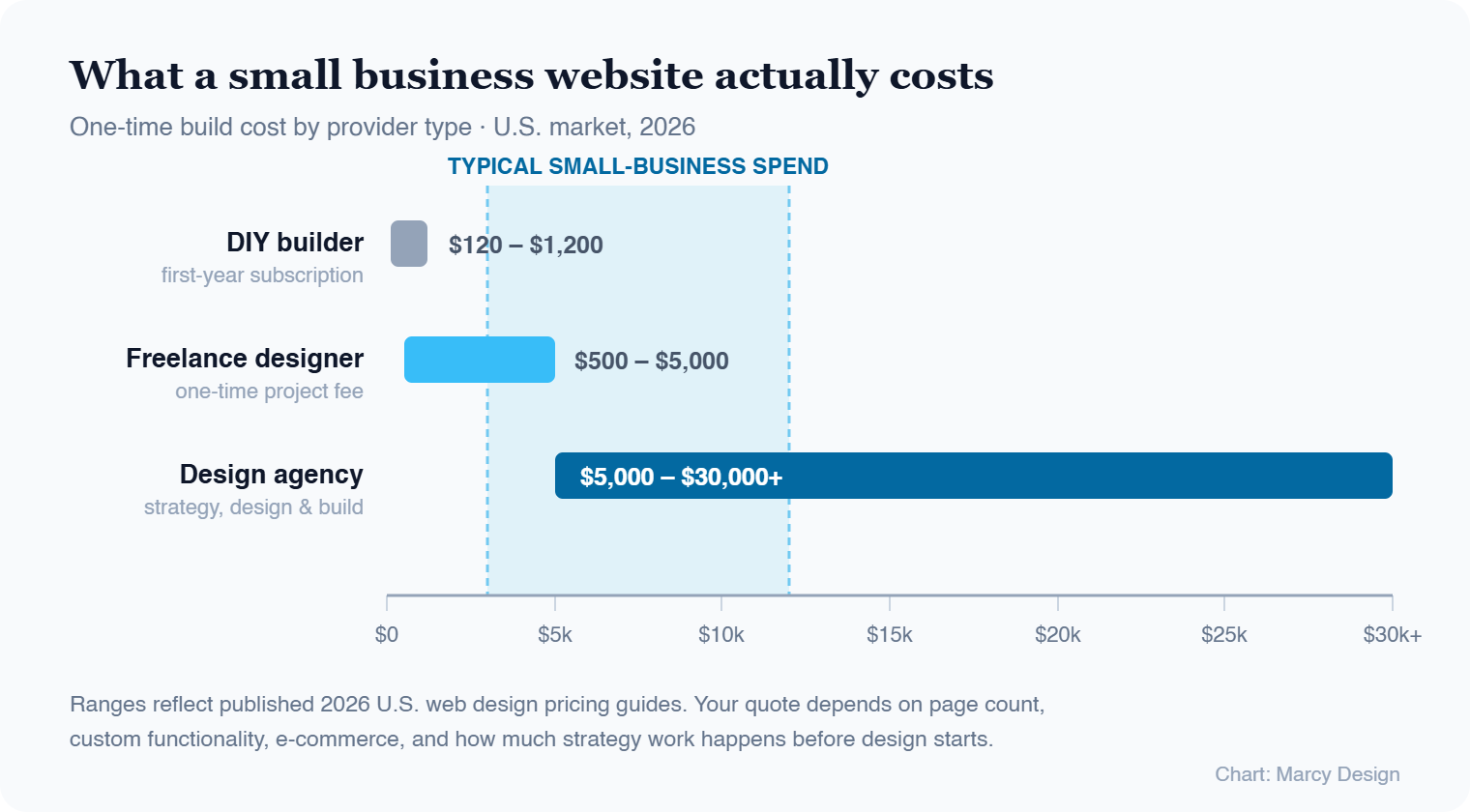
The spread is enormous, and the reason is simple: “website” describes a five-page brochure and a 400-product store equally well. What you’re really buying is the number of hours a competent person spends thinking about your business before anyone opens a design tool.
| Budget | What it realistically buys | Best fit for |
|---|---|---|
| Under $1,500 | DIY builder, a purchased theme, your own labor. You are the project manager, copywriter, and QA. | Pre-revenue, testing an idea, hobby business |
| $1,500–$5,000 | Freelancer or small shop. Template-based, light customization, limited strategy. Quality swings wildly. | Simple service business, under 10 pages |
| $5,000–$15,000 | Agency project. Custom design, real content work, SEO foundation, accessibility, testing across devices. | Most established Columbus small businesses |
| $15,000–$30,000+ | Custom functionality, e-commerce, integrations, multi-location, ongoing optimization. | Growing businesses where the site drives revenue |
One number people forget: ongoing costs. Budget $50–$200 per month for hosting, security updates, plugin licenses, and backups on a custom site. An agency that never mentions maintenance is either including it or hoping you don’t ask.
Watch the payment structure, not just the total. A reputable shop asks for a deposit — commonly 30–50% — and ties the rest to milestones. Full payment up front is a genuine red flag. So is a quote with no written scope attached, because “unlimited revisions” and “one round of revisions” produce very different invoices.
What separates a strong agency from a weak one?
The difference usually shows up before any design work starts. Strong agencies spend the first phase asking about your customers, your margins, and which services you actually want more of. Weak ones ask how many pages you want and which competitor’s site you like.

Here’s what to look for, and what should worry you:
| Signal | Green flag | Red flag |
|---|---|---|
| Portfolio | Live, clickable URLs you can visit and test on your phone | Static screenshots only, or sites that 404 |
| Discovery | Asks about revenue drivers, customers, and goals before quoting | Quotes a price in the first email |
| Ownership | You own the domain, the code, and the content outright | They “host it for you” and won’t hand over files |
| Platform | Explains the platform choice and its trade-offs | Proprietary system only they can edit |
| Timeline | 8–16 weeks with named milestones | “Two weeks, no problem” |
| SEO | Treated as structure and content from day one | Sold as a separate upsell after launch |
| Accessibility | Mentioned without being asked | Blank stare, or “we’ll add a widget” |
| References | Offers local clients you can call | Testimonials with first names only |
| Contract | Written scope, revision limits, milestone payments | Verbal agreement, or full payment up front |
The ownership question is the one that ruins people. Some shops register your domain in their own name, build on a proprietary platform, and hold the whole thing hostage when you want to leave. Ask this in writing: If we part ways in two years, what exactly do I walk away with? The answer should be “everything — domain, code, content, and analytics.” Anything vaguer is a warning.
Local presence matters more than agencies admit, but for an unglamorous reason. It’s not about coffee meetings. It’s that a firm with a Columbus reputation to protect behaves differently when a project goes sideways than an anonymous overseas vendor.
Why does site speed matter more than how the site looks?
Speed is the single most measurable driver of website revenue, and it beats visual design on nearly every study that’s tried to compare them. In their joint study Milliseconds Make Millions, Google and Deloitte tracked 37 brands over 30 days and found that improving mobile load time by just 0.1 seconds raised retail conversions 8.4% and travel conversions 10.1% (Google and Deloitte, Milliseconds Make Millions).
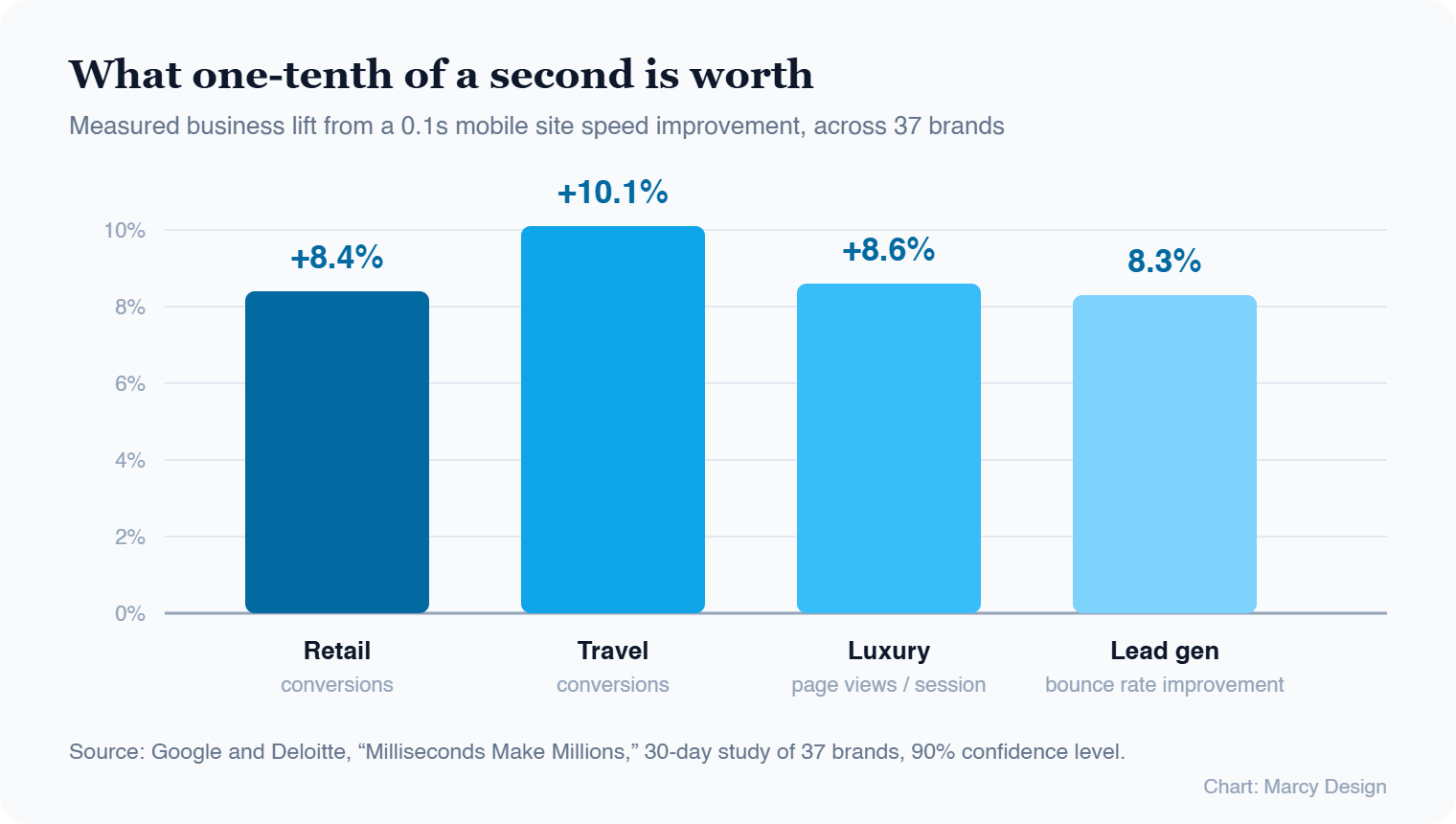
Read that again, because the scale is easy to miss. A tenth of a second. Not a redesign, not a rebrand — a delay shorter than a blink, worth 8.4% of retail conversions. Google’s own research has long put the threshold plainly: 53% of mobile visits get abandoned when a page takes longer than three seconds to load (Think with Google).
This has a direct implication for how you evaluate a proposal. Beautiful design that ships as a bloated, image-heavy, slow-loading page is a net loss. When you’re reviewing an agency’s portfolio, don’t just look at their work — test it. Pull up three of their live client sites on your phone, on cellular data, away from your office Wi-Fi. Count the seconds. That single test tells you more than an hour-long sales presentation.
Ask directly: What Core Web Vitals scores do your recent launches hit? An agency that measures performance will answer immediately. One that doesn’t will change the subject to design awards.
Is your website a legal liability you don’t know about?
Website accessibility has quietly become one of the most common legal risks facing small businesses, and most owners find out through a demand letter. In 2025, plaintiffs filed 4,928 web accessibility lawsuits in the United States, and 64% of the companies sued earned less than $25 million a year (UsableNet, ADA Website Compliance Lawsuit Tracker).
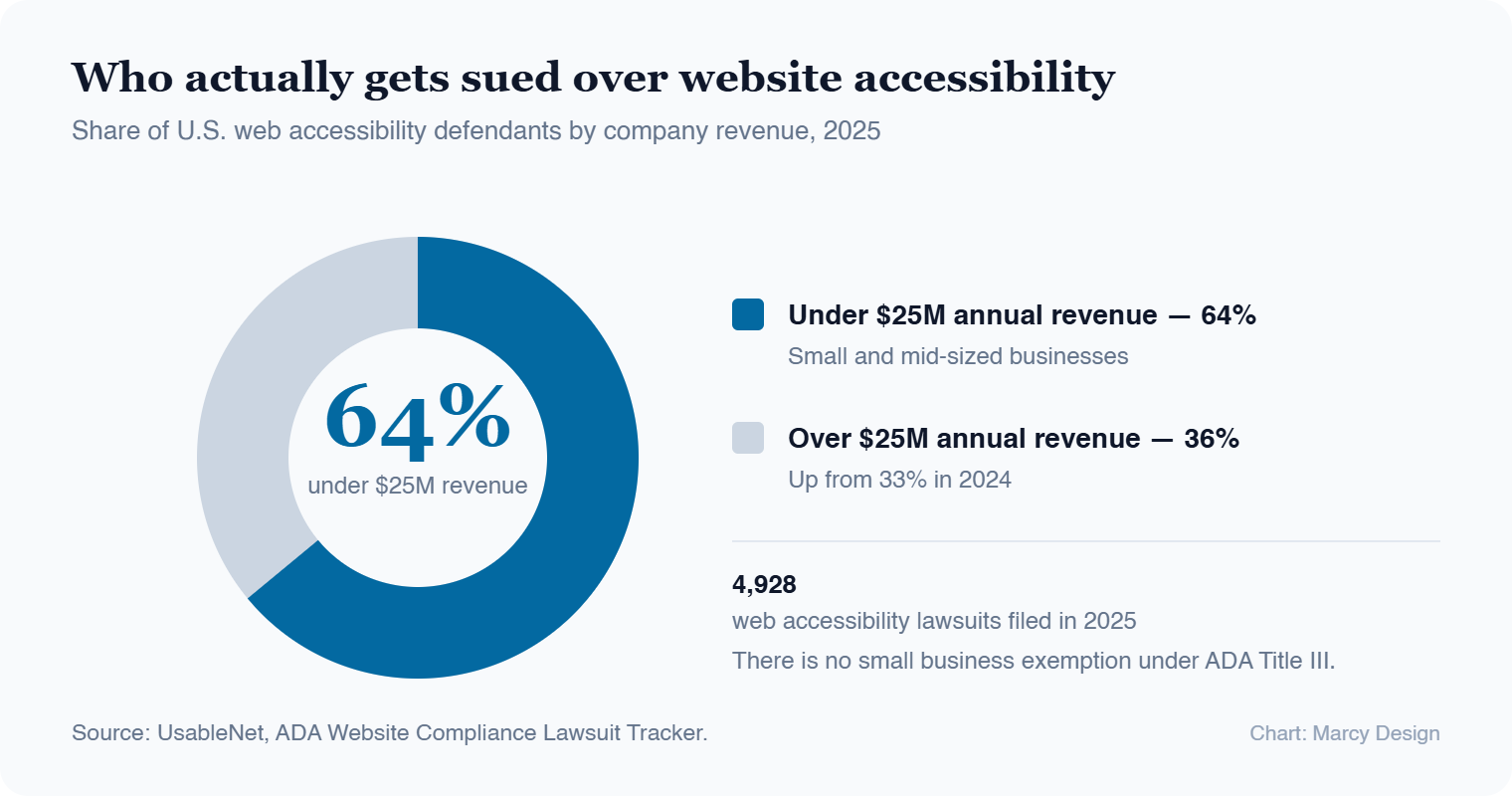
There is no small business exemption under ADA Title III. A restaurant, a dental practice, a local retailer — all of them have been targets. Retail and e-commerce sites draw the most filings, but service businesses are far from safe.
Accessibility means your site works for people using screen readers, keyboard navigation, or high-contrast displays. In practice that’s proper heading structure, real alt text on images, sufficient color contrast, labeled forms, and keyboard-navigable menus. Almost none of it is visible to a sighted mouse user, which is exactly why cut-rate builds skip it.
One warning about the shortcut. Overlay widgets — the little accessibility icon you’ve seen in page corners — are widely marketed as instant compliance. UsableNet’s tracking found that in June 2026 alone, 97 defendants in new accessibility lawsuits were already using a third-party accessibility widget. The widget didn’t stop the suit. Build it correctly instead.
When you’re comparing agencies, ask whether accessibility is included in the base build or sold separately. The answer tells you how the firm thinks about quality generally.
What should you ask before you sign?
Bring these to every agency conversation. The questions matter less than the confidence and specificity of the answers — vagueness here predicts vagueness later.
| Ask this | What a good answer sounds like |
|---|---|
| Who owns the domain, code, and content when we’re done? | “You do, all of it. It’s in the contract.” |
| What platform will you use, and why that one? | A specific recommendation tied to your needs and who’ll edit the site |
| Can I update the site myself without calling you? | “Yes, and we’ll train your team. Here’s the handoff document.” |
| What’s included after launch, and what costs extra? | A written maintenance scope with actual monthly numbers |
| How many revision rounds are included? | A specific number, defined in the contract |
| Will the site meet WCAG accessibility standards? | “Yes, it’s part of the base build” — not “we’ll add a plugin” |
| Can I speak to two clients from the last year? | Immediate yes, with contact information |
| What happens if we’re past deadline? | An honest answer about causes and communication, not a guarantee |
| How do you measure whether the site worked? | Leads, calls, form fills, revenue — not “impressions” |
If an agency dodges the ownership question or gets defensive about references, that’s your answer. Walk.
How long does a real website project take?
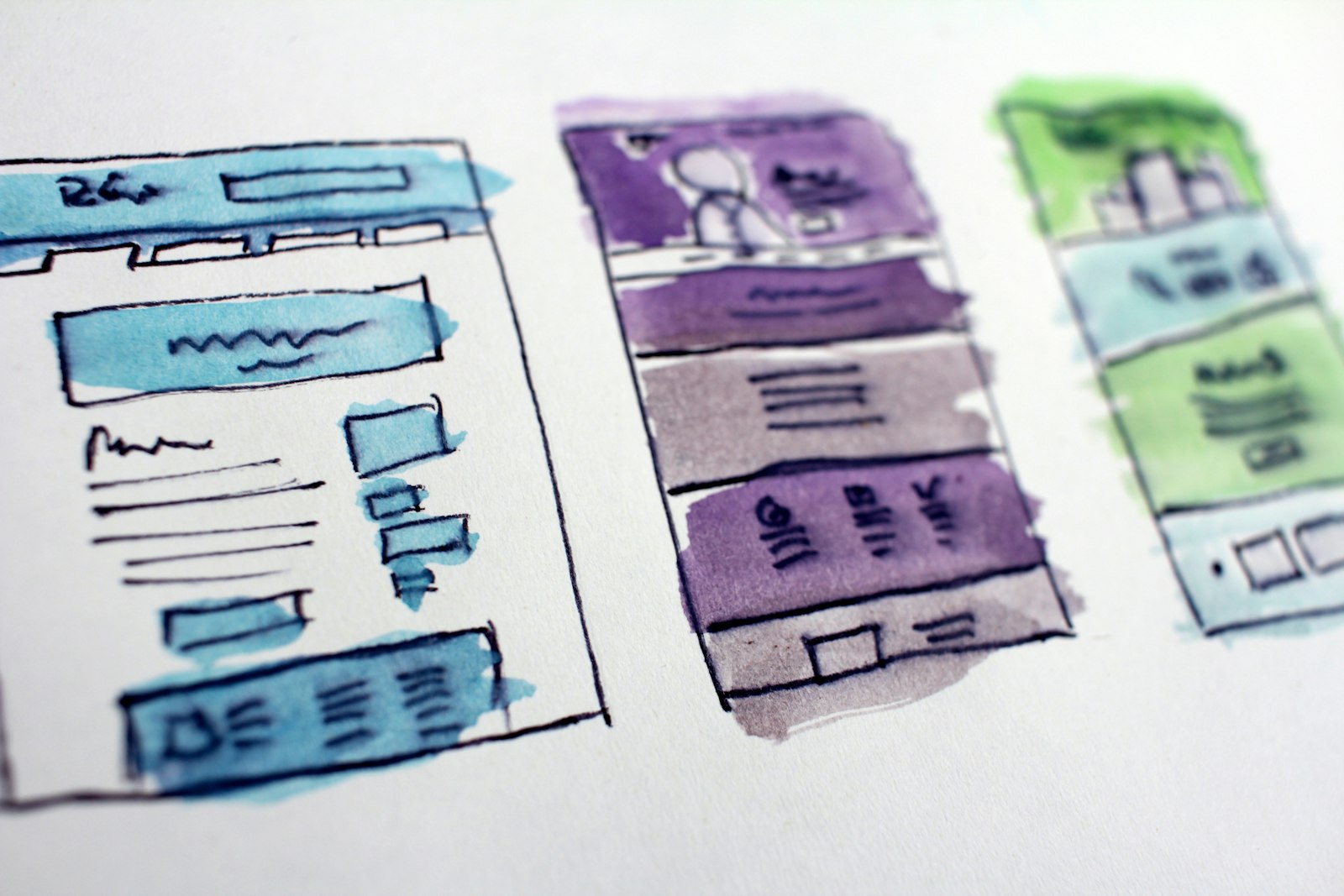
A custom small business website generally takes 8 to 16 weeks from kickoff to launch. The variable that stretches timelines isn’t design — it’s content. Projects stall waiting on copy, photos, and internal approvals far more often than they stall in development.
| Phase | Duration | What’s happening | What you owe |
|---|---|---|---|
| Discovery & strategy | 1–2 weeks | Goals, audience, competitive review, sitemap | Time in meetings, honest answers |
| Wireframes & structure | 1–2 weeks | Page layouts and navigation, before visual design | Fast, decisive feedback |
| Visual design | 2–3 weeks | Look, typography, brand application | Consolidated feedback, one voice |
| Content | 2–4 weeks | Copywriting, photography, product data | Usually the bottleneck |
| Development | 3–4 weeks | Build, responsive behavior, integrations | Availability for questions |
| Testing & launch | 1–2 weeks | Devices, browsers, speed, accessibility, redirects | Final review and sign-off |
Your single biggest lever on the timeline is content readiness. If you can hand over finished copy and real photography at kickoff, you can cut weeks off the schedule. If you’re planning to write the copy yourself “when things slow down,” add a month and be honest about it with your agency up front.
Be skeptical of anyone promising two or three weeks. That timeline is achievable, but only with a template and your own content — which is a legitimate product, just not a custom website. Make sure you know which one you’re buying.
Why Columbus businesses work with Marcy Design
This section is about us. Everything above applies whether you hire us or not — here are our credentials, stated plainly so you can compare them against anyone else on your list.
Marcy Design has operated in Columbus for 38 years. In that time the team has built more than 1,000 websites, completed over 14,000 marketing projects, and won more than 230 local, regional, and national awards (Marcy Design).
A few things that may or may not match what you need:
- Web accessibility is a standing service, not an add-on. Given the litigation numbers above, that matters more than it did five years ago.
- Specialized experience in categories most agencies don’t serve — associations, churches, veteran-owned businesses, and career and recruitment pages.
- Design, development, SEO, hosting, e-commerce, and email under one roof, which removes the finger-pointing that happens when three vendors share a project.
- Longevity. 38 years means the firm will plausibly still be here when your site needs its next refresh.
Our published work is at marcy.com/our-work, and you’re welcome to run the phone-on-cellular speed test from the section above on any of it. That’s the test we’d want you to apply to every agency you’re considering.
If you’d like to talk through a project: call (614) 224-6226, email marketing@marcy.com, or visit us at 347 S Gould Rd, Columbus, OH 43209. If we’re not the right fit, we’ll tell you.
Frequently Asked Questions
How much should a small business website cost in Columbus, Ohio?
Most Columbus small businesses spend $3,000–$12,000 for a professionally built site, with agency projects generally starting near $5,000. Simple template builds run less; e-commerce and custom functionality push past $30,000. Budget an additional $50–$200 monthly for hosting, security, and maintenance.
How long does it take to build a small business website?
Plan for 8 to 16 weeks from kickoff to launch for a custom site. Content preparation — copywriting, photography, and product data — is the most common cause of delay, not design or development. Having finished content ready at kickoff can cut several weeks from the schedule.
Do I really need to worry about website accessibility?
Yes. In 2025, plaintiffs filed 4,928 web accessibility lawsuits, and 64% of defendants earned under $25 million annually (UsableNet). There’s no small business exemption under ADA Title III. Accessibility widgets don’t reliably prevent claims — 97 defendants sued in June 2026 were already using one.
Is a local Columbus agency better than a cheaper remote option?
Not automatically, but local firms carry reputational accountability that anonymous vendors don’t. The more useful filter is ownership and communication: whoever you hire, confirm in writing that you own the domain, code, and content, and that you can reach a real person when something breaks.
Should I hire a freelancer or an agency?
Freelancers ($500–$5,000) work well for simple sites when you can manage the project and supply content. Agencies ($5,000–$30,000+) make sense when you need strategy, SEO, accessibility, and support from one accountable team. The deciding question is usually how much of the project management you want to own.
Sources
- U.S. Small Business Administration, Office of Advocacy, 2025 Ohio Small Business Profile, retrieved 2026-07-18. advocacy.sba.gov
- Google and Deloitte, Milliseconds Make Millions, retrieved 2026-07-18. web.dev/case-studies/milliseconds-make-millions
- UsableNet, ADA Website Compliance Lawsuit Tracker, retrieved 2026-07-18. info.usablenet.com
- Think with Google, mobile page speed and abandonment research, retrieved 2026-07-18. thinkwithgoogle.com
- Marcy Design, Who We Are, retrieved 2026-07-18. marcy.com/who-we-are
Cost ranges are synthesized from multiple published 2026 U.S. web design pricing guides and represent a market range rather than a single study.
Image credits: Columbus skyline by Tim Trad, agency team by Annie Spratt, wireframe sketches by Hal Gatewood — all via Unsplash (free commercial use, no attribution required; credited here as a courtesy).