
 614.224.6226
Did you know that embedded interactive tools currently achieve a 78% completion rate, while traditional static forms barely scrape past 38%? It’s a massive performance gap that defines the winners in 2026. Most ecommerce leaders agree that static product pages and friction-filled onboarding feel like an impersonal digital interrogation. You’ve likely felt the frustration of managing complex SKU data while watching potential buyers drop off your site. By implementing ai automation for ecommerce websites, you can replace that friction with a guided experience that feels like an attentive in-store associate.
This strategy guide will show you how to transform your store from a static catalog into an interactive, AI-driven sales engine that personalizes every journey. We’ll explore how agentic workflows and diagnostic assessments can automate your lead capture and boost your consultation rates. Whether you’re streamlining onboarding or qualifying high-intent buyers, these tools provide immediate value. From the tech hubs of Columbus to global marketplaces, the shift toward interactive commerce is here. We’ll walk you through the step-by-step process of using these tools to achieve scalable growth and deep customer loyalty. It’s time to build a website that doesn’t just display products but actively sells them.
Key Takeaways
- Learn how to move beyond basic chatbots toward proactive agentic workflows that anticipate customer needs in real time.
- Discover why ai automation for ecommerce websites is replacing static contact forms with high-converting interactive discovery tools.
- Master the art of automated lead capture and complex onboarding to ensure a seamless experience for every B2B and B2C shopper.
- Follow a logical framework to audit your store’s friction points and align AI integration with your specific ROI goals.
- Understand the strategic advantage of partnering with Columbus specialists who combine time-tested business principles with bold technological innovation.
Beyond Chatbots: The Evolution of AI Automation in Ecommerce
The era of the “dumb” chatbot is officially behind us. In 2026, the standard for ai automation for ecommerce websites has shifted from reactive widgets to proactive, agentic workflows. High-growth brands no longer wait for a customer to ask a question. Instead, they deploy systems that anticipate needs, manage complex data, and drive sales with the precision of a seasoned consultant. This evolution is about more than just speed. It’s about replacing static friction with a fluid, intelligent experience that mirrors human interaction.
Traditional ecommerce filters are failing the modern shopper. Relying on rigid checkboxes for size, color, or price is an outdated method that creates unnecessary work for the user. Today’s “AI shopper” expects the storefront to understand intent. Manual SKU management is also becoming a relic of the past. Modern systems utilize AI-driven product enrichment to automatically categorize, tag, and describe thousands of items in real time. This bridges the gap between digital convenience and the personalized touch of a professional consultation, ensuring your store acts as a high-performance sales engine rather than a static catalog.
The Rise of Agentic Workflows
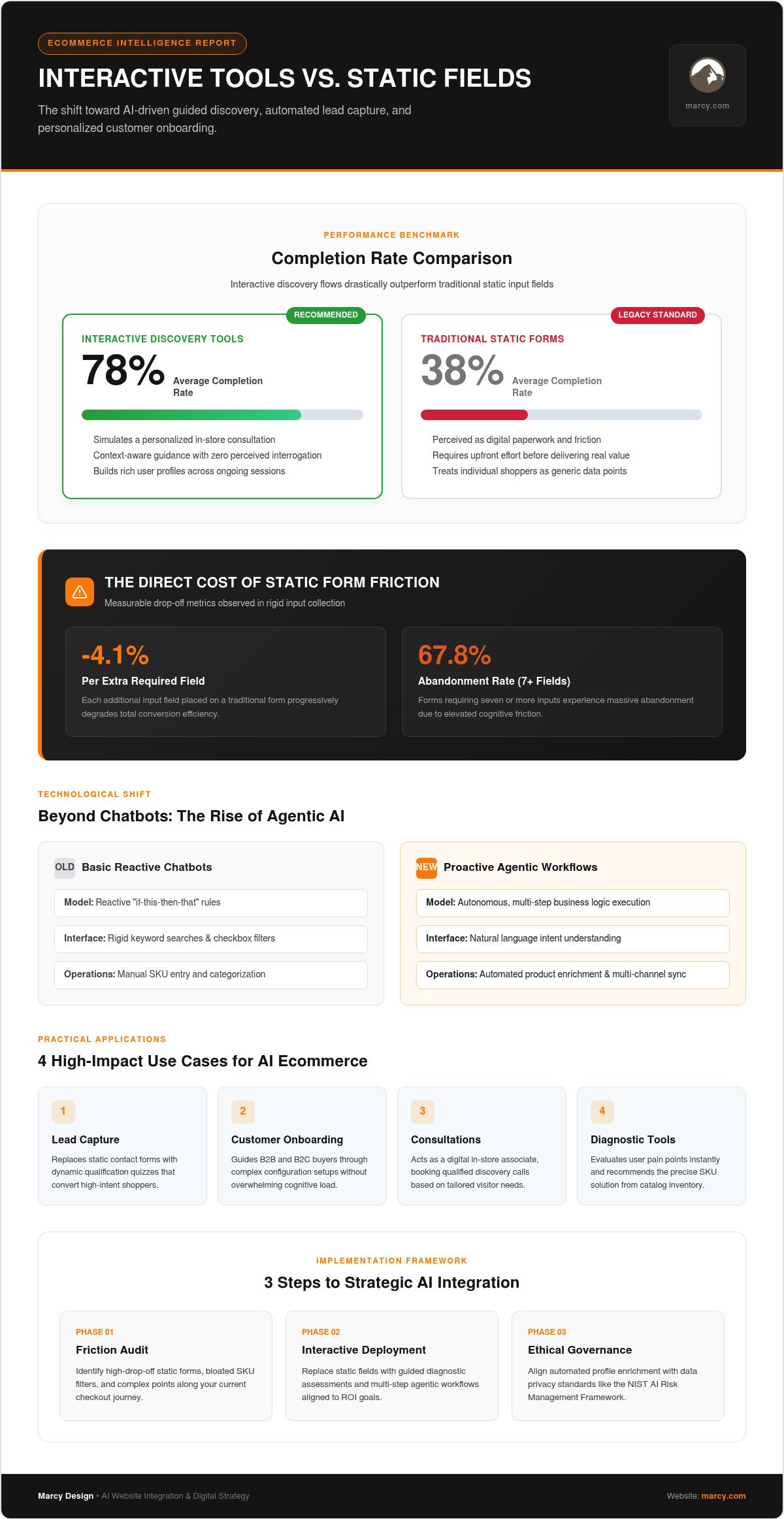
Agentic workflows are self-correcting systems that execute business logic. Unlike basic marketing automation systems that follow simple “if-this-then-that” rules, these agents handle multi-step tasks with autonomy. They can sync inventory across global channels, route customer inquiries based on sentiment, and even adjust pricing based on market shifts. For Columbus-based ecommerce teams, this means a massive reduction in operational overhead. You can finally stop focusing on repetitive data entry and start focusing on high-level strategy and creative growth.
AI as the New Interface
We’re moving away from “searching” and toward “conversing” with storefronts. Natural language processing allows customers to describe their specific problems rather than clicking through tags. A shopper might say, “I need a durable outfit for a rainy hike in the Hocking Hills,” and the AI provides a curated selection immediately. By integrating AI website integration services, you transform your site into a helpful guide. This interactive approach doesn’t just improve the user experience; it builds authority and trust. It turns a simple transaction into a memorable brand interaction that keeps customers coming back.
Interactive Tools vs. Static Fields: Why Personalization Wins
The psychological shift in 2026 is clear. Customers don’t want to be interrogated; they want to be understood. Traditional static fields feel like digital paperwork, a chore that creates immediate friction. In contrast, ai automation for ecommerce websites allows brands to replace these hurdles with interactive discovery assessments. This isn’t just about aesthetics. It’s about engagement. While a static form feels like an impersonal data grab, an interactive flow feels like a professional consultation. This subtle shift in perception is why interactive tools achieve a 78% completion rate compared to a meager 38% for traditional forms.
Personalization at scale is the engine behind this success. AI systems now remember user preferences across sessions, building a rich profile without requiring the user to repeat themselves. This creates a sense of continuity and trust. When implementing these intelligent tools, savvy businesses align their strategy with the NIST AI Risk Management Framework to ensure data privacy and ethical governance. By prioritizing the user’s psychological comfort, you don’t just capture a lead; you start a relationship.
The Friction of Static Forms
Static fields are a relic of 20th-century web design that simply don’t hold up in 2026. They demand effort before providing value. Research shows that each extra required field in a static form decreases conversion rates by 4.1%. If your form has seven or more fields, you’re likely facing an average abandonment rate of 67.8%. The cognitive load of “filling out a form” is high. It triggers a defensive response in users who are wary of how their data will be used. Static collection misses the nuance of intent, treating every visitor like a generic data point rather than a unique individual with specific needs.
The Power of Interactive Guided Experiences
Interactive tools flip the script by providing immediate value during the data-collection phase. Instead of a “Contact Us” box, imagine a product recommendation quiz that helps a shopper find the perfect fit or a diagnostic tool that builds a custom skincare regimen. These experiences feel helpful, not intrusive. They achieve conversion rates of 40% or higher because the user receives a personalized result in exchange for their input. To work effectively, these tools must be built on a foundation of mobile responsive web design, ensuring the experience is seamless on any device. If you’re ready to move beyond basic templates, exploring strategic AI integration can help you turn static friction into interactive growth.
Core Use Cases: Automating Lead Capture and Customer Onboarding
Lead capture in 2026 isn’t a passive activity. It’s an active filter. High-performance ai automation for ecommerce websites now acts as a proactive gatekeeper, qualifying prospects before they ever touch your CRM. By using conversational intake tools, you can identify a customer’s specific pain points and budget in real time. This doesn’t just build a list; it builds a pipeline of high-intent opportunities that are ready for conversion. You’re no longer wasting time on unqualified leads who are just browsing your catalog.
The financial impact of this shift is significant. According to McKinsey research on customer personalization, 71% of consumers expect personalized interactions, and companies that excel here generate 40% more revenue. Interactive quizzes and assessments gamify the discovery process, turning what used to be a boring form into an engaging brand experience. This approach yields higher completion rates and provides the deep data needed to tailor the subsequent sales journey without adding manual work for your team.
Streamlining the Onboarding Process
Complex products, especially in B2B ecommerce, often suffer from high friction during the setup phase. Integrating ai automation for ecommerce websites allows you to automate the “getting started” phase for complex products or services. We’ve seen this challenge firsthand in the Ohio market. For example, a Columbus business recently integrated an AI-driven onboarding agent that reduced their total setup time by 40%. The system guided new clients through technical configurations and documentation, only alerting a human specialist when a specific, nuanced question arose. This ensures the human touch remains at critical transition points while removing the repetitive manual labor that slows down growth.
AI-Powered Professional Consultations
Generic “Book a Call” buttons are being replaced by intelligent scheduling and intake agents. Instead of waiting for a meeting to learn about a client, the AI “pre-interviews” them. It gathers requirements, summarizes their needs, and presents a concise brief to your sales team before the call even starts. This makes every minute of the consultation more productive. By deploying AI powered ecommerce solutions, you can ensure your team focuses on closing deals rather than basic data collection. It’s a professional, efficient way to manage growth without sacrificing the quality of your client relationships.
Implementing AI in Business Strategy: A Step-by-Step Framework
Successfully deploying ai automation for ecommerce websites requires a methodical approach rather than a scattershot adoption of new tools. You can’t simply plug in an LLM and expect immediate ROI; you need a strategy that aligns with your specific operational reality. Follow this five-step framework to ensure your integration is both seamless and profitable.
- Step 1: Audit your current friction points. Identify exactly where customers are dropping off. Is it during a complex product selection or a lengthy onboarding form?
- Step 2: Align AI tools with specific business goals. Decide if your priority is lowering Customer Acquisition Cost (CAC) through better lead capture or increasing Lifetime Value (LTV) through personalization.
- Step 3: Choose your integration path. Determine if “off-the-shelf” agents meet your needs or if your business logic requires a custom-integrated solution.
- Step 4: Pilot on high-traffic pages. Don’t overhaul the entire site at once. Test interactive tools on your most visited landing pages to gather data quickly.
- Step 5: Measure and scale. Monitor the human-AI collaboration; iterate on your prompts and workflows based on real-world performance.
Identifying High-Impact Automation Opportunities
Start by focusing on the “boring” tasks that drain your team’s creative energy. Handling repetitive FAQs, manual SKU tagging, and basic data entry are prime candidates for automation. We define the ROI of AI as efficiency gained plus customer satisfaction earned. When you use AI for marketing automation, you free up your specialists to focus on high-level growth strategies while the AI manages the data-heavy lifting. This ensures your store remains agile and responsive without ballooning your payroll.
Maintaining Brand Authority During Integration
Your AI should sound like your brand, not a generic computer program. This requires setting strict guardrails to ensure accuracy and a professional tone that reflects your company’s values. Local expertise is vital during this phase. Working with a team experienced in web design in Columbus, Ohio ensures your technology remains grounded in the specific needs of your regional market. It’s about combining bold innovation with time-tested business principles. If you’re ready to build a smarter, more efficient storefront, contact Marcy Design to start your strategic AI integration today.
Partnering for Growth: AI Website Integration Services in Columbus
Columbus has solidified its reputation as the heart of the Silicon Heartland. With massive data center corridors and a thriving retail tech ecosystem, our city is a critical hub for applied innovation. Choosing the right partner for ai automation for ecommerce websites requires a team that understands this local landscape. National platforms often offer generic, outsourced support that misses the nuance of the Ohio business environment. You need a partner that combines technical mastery with a deep understanding of regional logistics and consumer behavior. This localized dedication ensures your technology is grounded in the reality of your market.
Marcy Design bridges the gap between bold innovation and time-tested stability. As a veteran-owned agency, we approach every project with professional confidence and a results-oriented mindset. Our holistic digital approach ensures that your AI integration isn’t just an isolated experiment. We align your automation with high-impact advertising campaigns and social media management to create a unified brand presence. This comprehensive strategy turns your ecommerce site into a powerful sales engine that works around the clock. We focus on the mechanics of business growth so you can focus on your vision.
The Marcy Design Difference
Our legacy is built on reliability and a deep-rooted connection to our service area. Founded in 1986, Marcy Design takes its name and inspiration from the heights of Mount Marcy, signifying our commitment to reaching the summit of creative work. We integrate AI without losing the human touch that defines your brand. You get direct access to specialists who understand website design and strategic business growth. We don’t just build tools; we build long-standing partnerships that help your business prosper. Our team is ready to tackle your most complex challenges with high energy and efficiency.
Next Steps for Your Ecommerce Brand
Preparing for the 2026 technological shift requires immediate, actionable steps. The transition from static catalogs to interactive, agentic storefronts is already underway. You don’t have to navigate this shift alone. Our team is ready to guide you through a logical audit of your current digital presence. We’ll identify the friction points and deploy custom Shopify or B2B solutions that scale with your ambitions. It’s time to move past generic templates and embrace a personalized, high-performance future. Schedule your AI strategy session today and discover how we can transform your ecommerce results.
Build a Smarter, More Interactive Ecommerce Future
The shift from static digital catalogs to interactive, guided experiences is the defining strategy of 2026. It’s time to act. You’ve seen how moving beyond basic chatbots toward agentic workflows can eliminate friction and build deeper customer trust. By replacing outdated static forms with intelligent discovery tools, you create immediate value for every visitor. Implementing ai automation for ecommerce websites isn’t just a technical upgrade. It’s a fundamental shift in how you connect with your audience and drive measurable ROI.
Success requires a partner that combines bold innovation with time-tested stability. Marcy Design has been a veteran-owned and operated leader in the Columbus community since 1986. Our expert design and development team is ready to help you navigate this technological shift with precision and confidence. We specialize in custom solutions that turn complex business challenges into scalable growth opportunities. Don’t let your storefront remain a static relic of the past.
Ready to automate? Schedule your AI strategy consultation with Marcy Design today. We look forward to helping your business prosper in this new era of digital commerce.
Frequently Asked Questions
How does AI automation improve ecommerce conversion rates?
AI automation improves conversion rates by removing friction and providing personalized guidance. Interactive tools like product recommendation quizzes achieve conversion rates of 40% or higher compared to the 2% to 5% seen with static forms. By analyzing user intent in real time, these systems guide shoppers to the exact products they need. This reduces abandonment and builds trust through immediate value. It’s the difference between a digital interrogation and a professional consultation.
What is the difference between an AI agent and a traditional chatbot?
The difference lies in autonomy and logic. Traditional chatbots are reactive and rely on pre-scripted, rule-based answers. AI agents are proactive and utilize agentic workflows to handle multi-step tasks like inventory syncing or customer routing. They don’t just follow scripts; they execute business logic and self-correct based on context. This makes agents far more effective for complex ecommerce operations in 2026. They function as autonomous specialists rather than simple messaging widgets.
Can I integrate AI into my existing Shopify or BigCommerce store?
Yes, you can integrate sophisticated AI solutions into platforms like Shopify and BigCommerce. These platforms have evolved to support deep API connections and native AI tools like Shopify Sidekick. Strategic ai automation for ecommerce websites involves bridging these out-of-the-box features with custom CRM or ERP workflows. Our Columbus-based team specializes in these integrations. We ensure your existing store becomes a high-performance sales engine without requiring a total rebuild of your current tech stack.
Will AI automation make my ecommerce site feel impersonal?
Quite the opposite; AI automation makes your site feel more personal by mimicking a human sales associate. While static pages treat every visitor the same, AI-driven tools remember preferences and adapt to individual needs. It’s about replacing searching with conversing. By setting the right brand guardrails, your AI maintains your unique voice while providing the attentive, one-on-one guidance that modern shoppers expect. It turns an impersonal transaction into a memorable brand interaction.
What are the best real-world use cases for AI in ecommerce lead capture?
The most effective use cases involve gamified quizzes and diagnostic assessments. Instead of a static email popup, sites use product match tools that provide immediate value. For example, a skincare brand might use a diagnostic tool to build a custom regimen. This approach qualifies prospects before they hit your CRM and achieves completion rates near 78%. It turns lead capture from a demand into a helpful service that establishes trust and reciprocity with the user.
How much does it cost to implement AI website integration services?
Implementation costs vary significantly based on the complexity of your business logic and the depth of the integration. Factors include whether you’re using off-the-shelf agents or custom-engineered workflows tailored to your specific SKUs. Since every business has unique friction points, we recommend a strategic consultation to define your specific needs. This ensures your investment aligns directly with your goals for ROI and long-term growth. We focus on providing high-impact solutions that deliver measurable results.
What is the first step to automate my business with AI in Columbus?
The first step is to audit your current customer journey to identify friction points. Look for areas where abandonment is high or where your team spends time on repetitive tasks like FAQ handling. Once these opportunities are identified, you can align them with specific business goals. Partnering with a local expert like Marcy Design ensures your ai automation for ecommerce websites is grounded in the Columbus market. We help you transition to a smarter storefront while maintaining brand authority.
How do interactive tools compare to static forms for customer onboarding?
Interactive tools outperform static forms by reducing cognitive load and increasing engagement. While static forms feel like a digital interrogation, interactive workflows feel like a guided onboarding experience. Research indicates that multi-step interactive flows convert 86% higher than long single-page forms. By providing immediate feedback or results at each step, you ensure the user feels supported. This guided approach produces better results for the end-user and higher completion rates for your business.